A news brand built to be trusted, then maintained for three years.
In 2016 CoinDesk was a bitcoin news site with a conference attached. We gave it a masthead, a style guide, a site, app screens, a newsletter, and the event brands for Consensus and Construct.
- Brand identity
- Style guide
- Web and app product design
- Event branding
- Campaign assets
The challenge
CoinDesk covered a sector where much of what got written later proved false. Its logo would sit above stories about other people's money. So the brief was not to be liked. It was to be believed.
The work also had to stretch well past a logo. The same team needed to carry the identity into a news site, a mobile app, a daily newsletter and two event brands, without the pieces drifting apart.
What we did
Explore several routes, then reduce
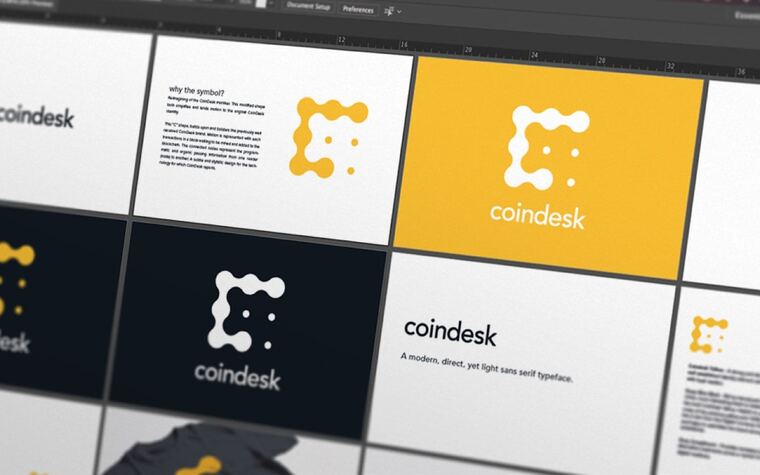
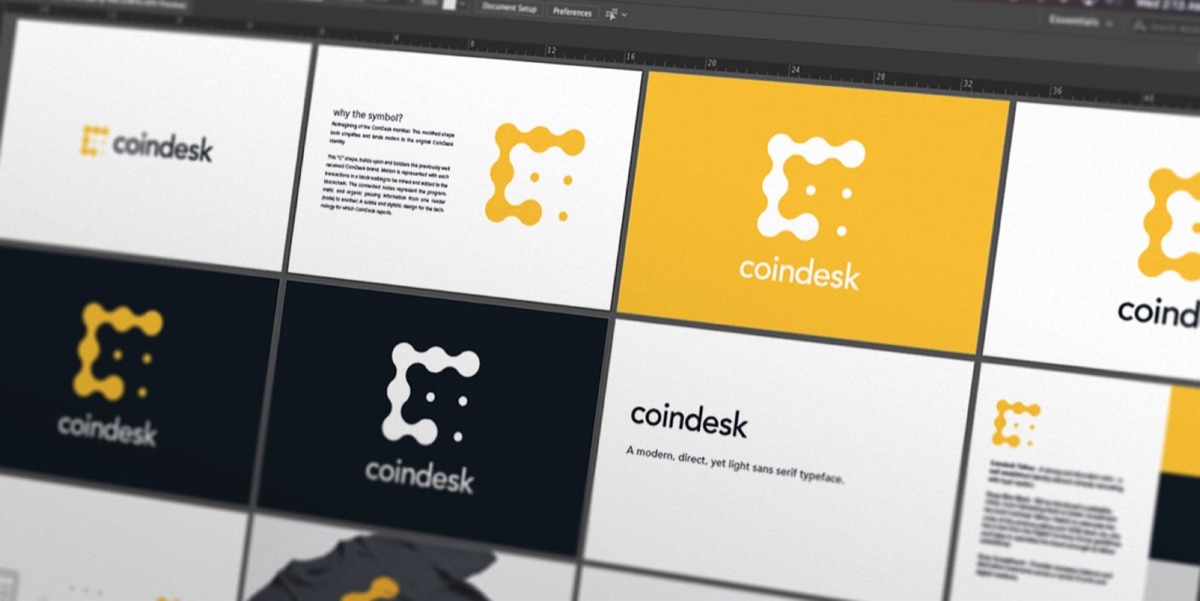
We ran four named masthead directions side by side, chain, morse, bubble and stacked, each with its own PDF and font report. One was printed on a shirt before any winner was picked, to see how it held up on fabric. The final mark came down to yellow and near-black, Avenir over Proxima Nova, and fifty pixels of clear space around the logo every time.
Write the rules down
The first guidelines shipped in September 2016. Ten more versions followed in twelve days in February 2017. The book explained why each choice was made, right beside the artwork, which kept thirteen versions consistent with each other.
Carry it into the product
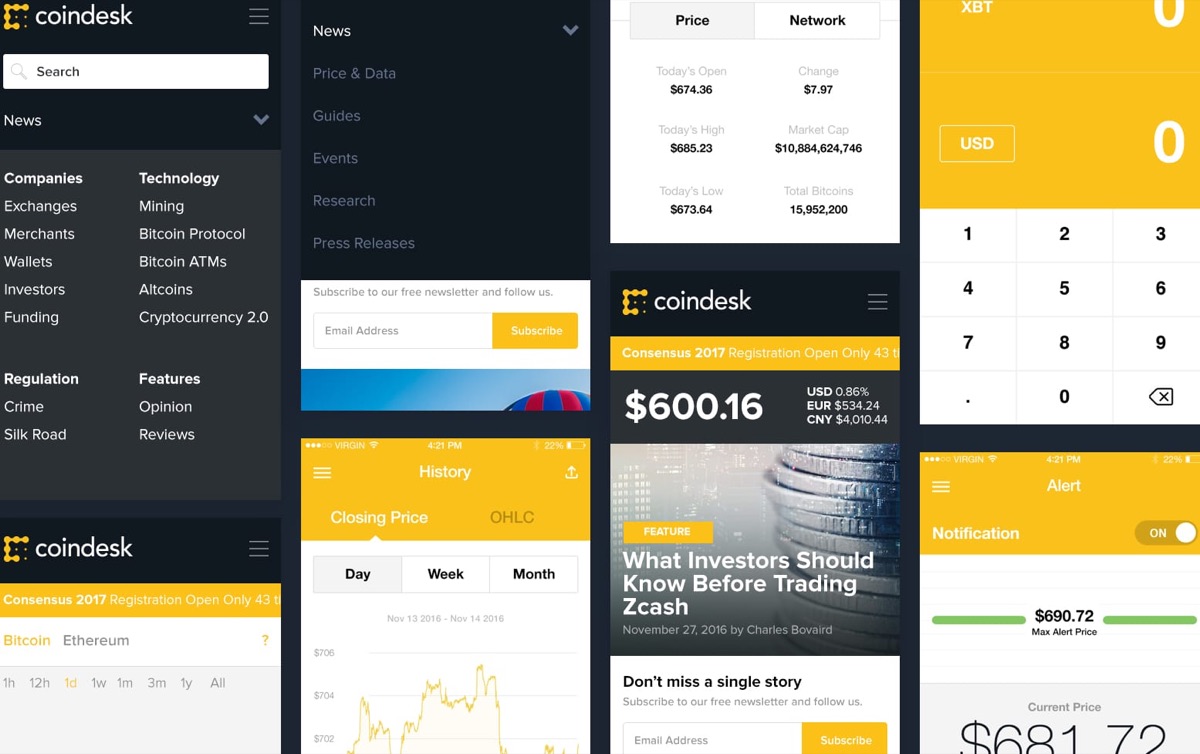
We produced seven wireframes, then comps and a responsive set, handed off in January 2017. Six boards went in front of CoinDesk's board in December 2016. We also designed eight numbered app screens and built the CoinDesk Daily newsletter as a working email template.
Keep brand and campaign together
Consensus and Construct marks were locked in a single afternoon in July 2016. The Consensus 2017 campaign then shipped as one delivery: hero variants, banners, email headers, social assets, countdown timers and a fourteen-page sponsor prospectus.
The result
The CoinDesk mark is still recognizably the one we drew, and the style guide was still being revised in June 2019. Consensus 2016 drew more than 1,500 industry professionals, and CoinDesk projected 2,000+ attendees from 800+ companies for 2017. Those are CoinDesk's own figures from the prospectus we designed.
Not everything held. Construct was branded but never got a campaign. We have no proof the app shipped and no traffic data for the site, so we claim neither. The tilted Consensus hexagon has since been retired. The event itself is still running.
What this means for your business
Decide what the work must do before deciding how it should look. Here the test was trust, and that one sentence settled dozens of later choices. Writing the reasons down next to the rules is what let the system survive years of edits by many hands.
This project was delivered by the Innovation Theory team, the Denver firm behind InTheory, before InTheory existed as its AI practice.
Other case studies
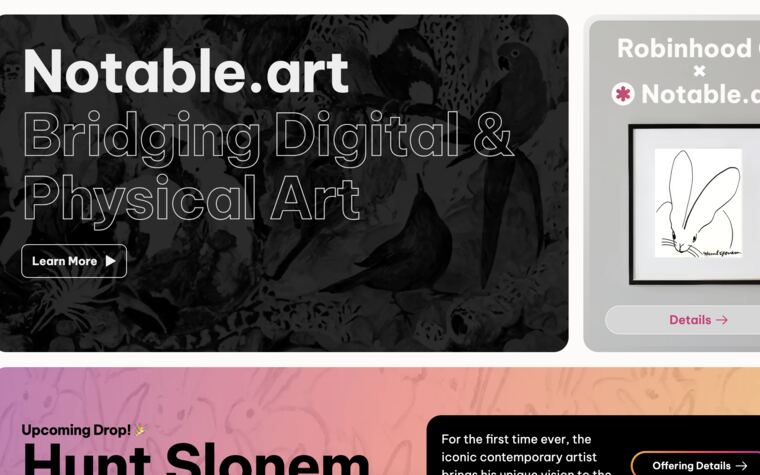 Product · 2022–2024
Notable.art
A fifty-year physical catalog became a 991-work digital edition, each piece paired with an archival print and a certificate.
Read the case study →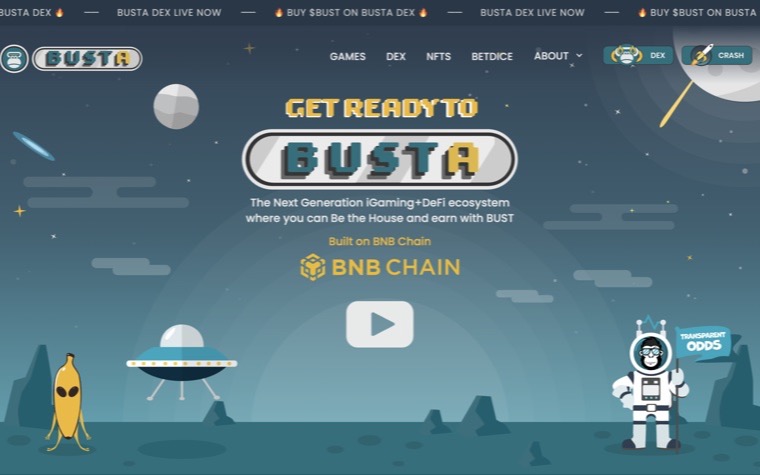 Product · 2021–2022
BUSTA
Six vendors, one shared database, a four-day outage, then load tests that took the safe ceiling from 120 to 350 users.
Read the case study →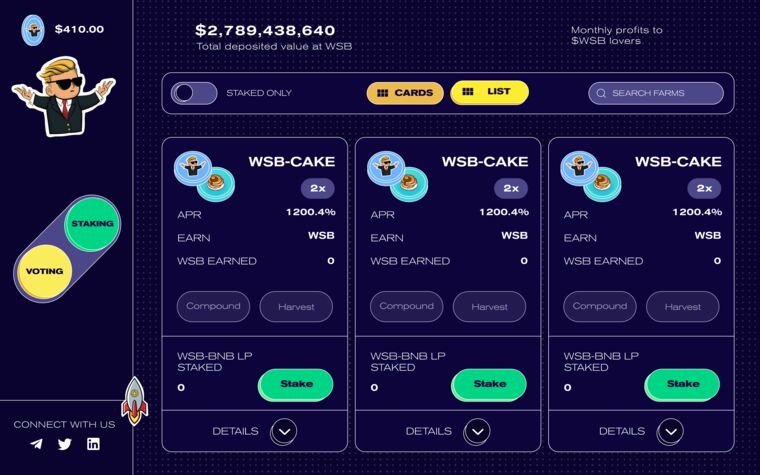 Product · 2021–2022
WallStreetBets
From thesis to live portfolio products in thirteen months, with a campaign that logged 13,806 visits against a 1,000-a-day goal.
Read the case study →Bring one expensive workflow. Leave with a clear next step.
In 30 minutes we look at one recurring workflow, what it costs you today and whether there is a credible case to improve it. If there is not, we will say so.
30 minutes with Phil or Martin. No technical brief, no pitch deck. Phil or Martin replies personally, usually within one business day.