We sold art to art buyers and kept the blockchain out of sight.
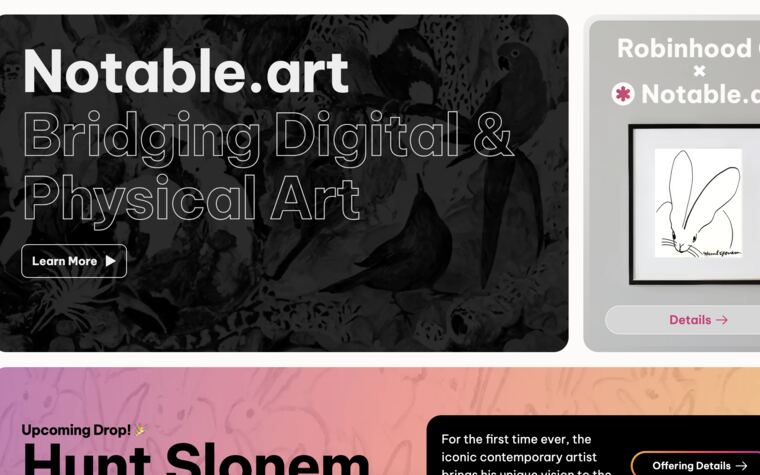
Notable brought us in to take a painter with a fifty-year career, and a catalog that was entirely physical, into digital art. Over twenty months we built the offering, the rarity system and the sales path, and the 991-work edition went public with a show in New York.
- Product scoping
- Artist onboarding
- Offering design
- Platform build
- Fulfillment integration
The challenge
The artist had tens of thousands of originals plus prints, books, fabrics and furniture, and none of it was digital. His audience, about 150,000 people at the time, bought things to hang on a wall. They had no interest in learning about wallets.
The job was to make physical work sellable on a chain without asking buyers to care about the chain. That meant settling legal and money questions early, including whether paying transaction fees on a buyer's behalf would need a money transmitter license.
What we did
Set one strategy and hold it
From the August 2022 proposal onward, every digital piece came bridged to an archival print and a certificate of authenticity. The October skeleton laid out twelve steps, four offering concepts and anti-counterfeiting measures. That line never changed.
Spec a lovable product, not a minimal one
The March 2023 spec covered account creation with a generated wallet, browsing, collections, a secondary market, print redemption, card and crypto checkout and a live reveal. It ended with open questions for engineering, product, legal and finance.
Digitize carefully, then generate
About thirty paintings were photographed at high resolution and five became masters. We wrote a rarity table and a generator script. Eleven traits, with weather tinting at five levels, turned a few source paintings into an edition of 991.
Make the purchase feel ordinary
We built a fulfillment service that mints a work when a Shopify order completes, plus a custodial wallet made from an email address and a concierge layer for support. Contracts were tested on a test network before going live on Ethereum.
The result
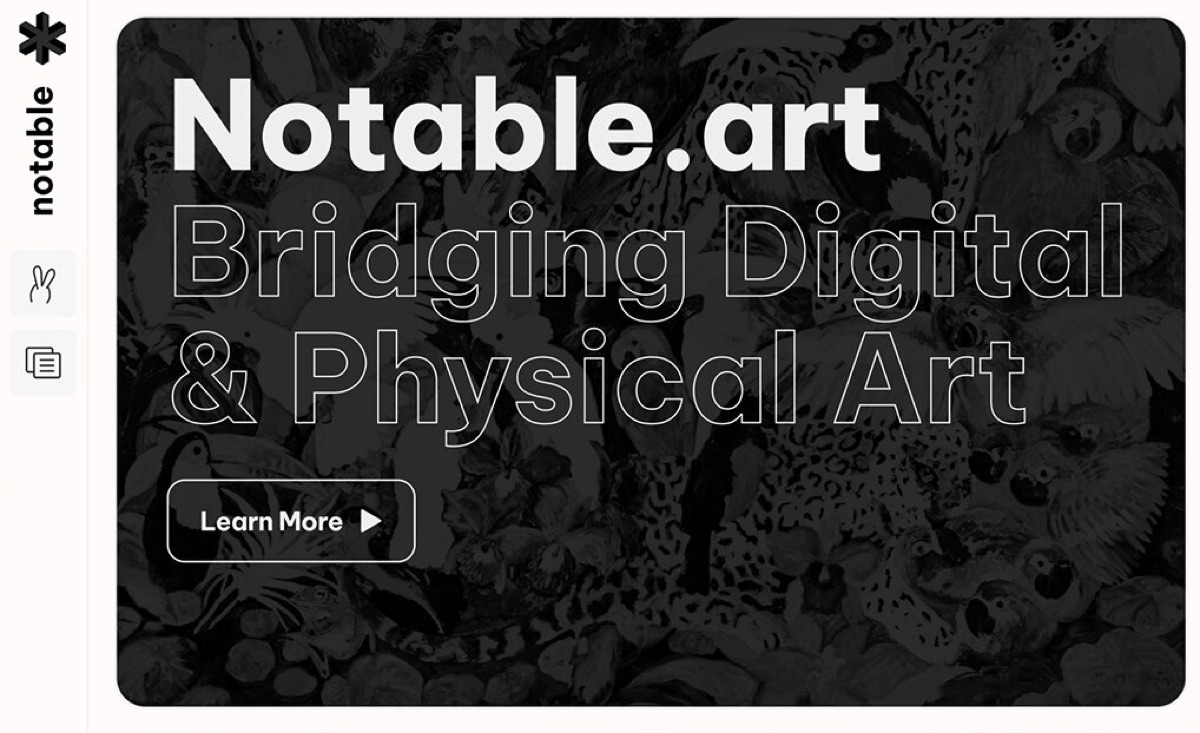
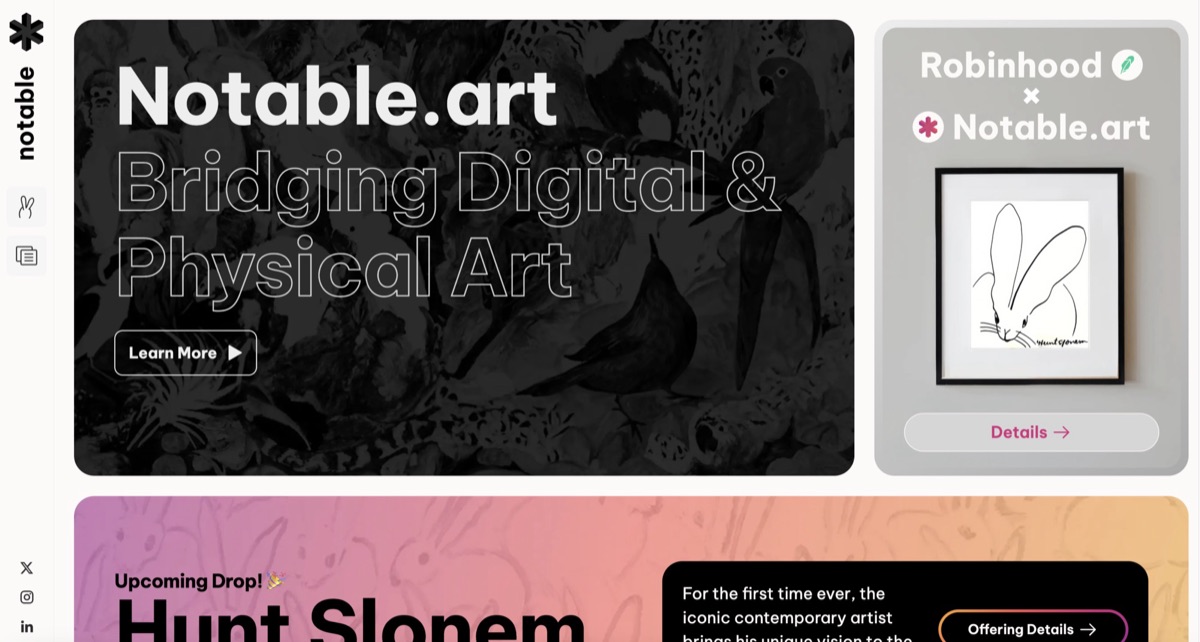
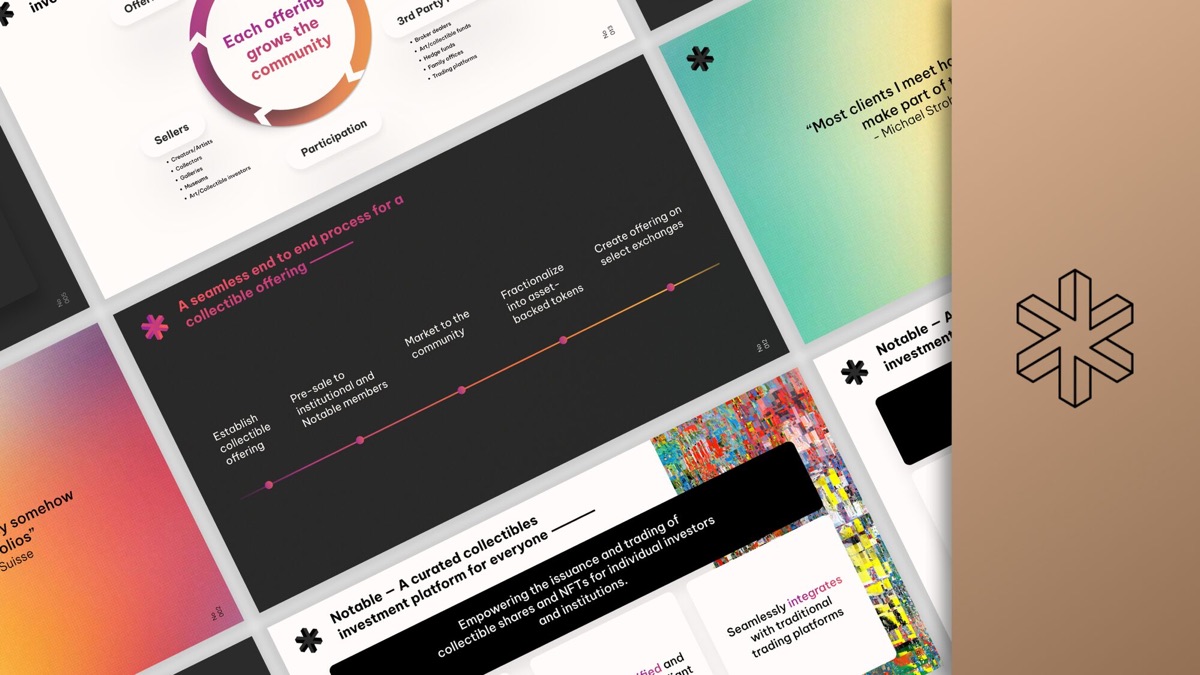
By February 2024 there was a working path from a Shopify order to a minted asset, and one was generated live through it. The brand was unveiled at a gala, a second artist received an offering deck, and the 991 works went public with a show in New York.
The timing hurt. NFT demand was cooling before the system was done, and the offering shifted toward print sales. Twenty-one finished pieces were catalogued as unused when the record stops in April 2024.
What this means for your business
Build what your customers already want to buy, and let the technology stay in the background. We would make that call again. The harder lesson is that a working system does not sell itself, and the business strategy has to be as clear as the build.
This project was delivered by the Innovation Theory team, the Denver firm behind InTheory, before InTheory existed as its AI practice.
Other case studies
 Product · 2021–2022
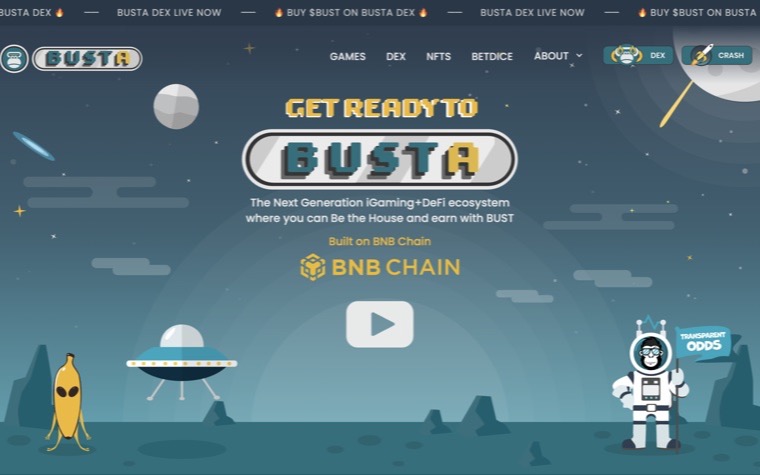
BUSTA
Six vendors, one shared database, a four-day outage, then load tests that took the safe ceiling from 120 to 350 users.
Read the case study →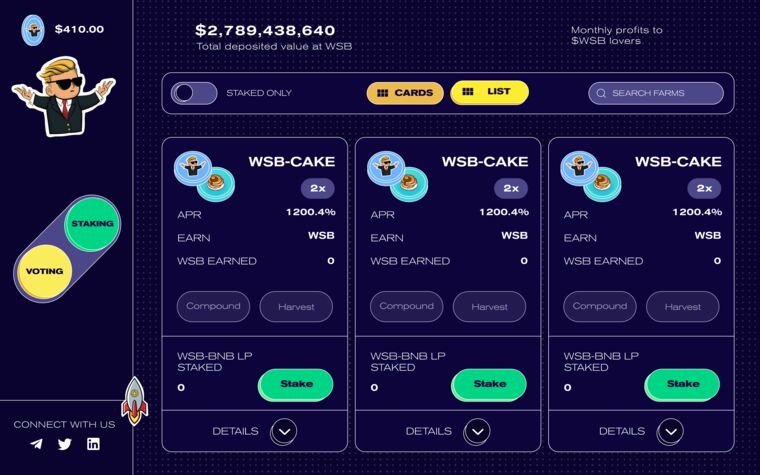 Product · 2021–2022
WallStreetBets
From thesis to live portfolio products in thirteen months, with a campaign that logged 13,806 visits against a 1,000-a-day goal.
Read the case study →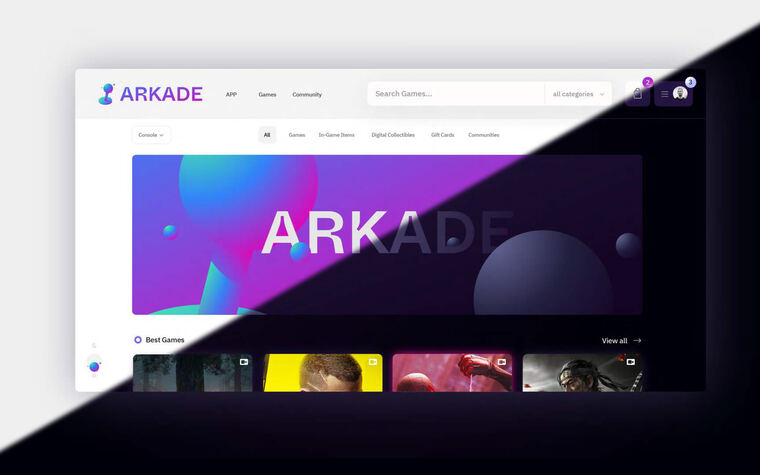 Prototype · 2021–2022
Arkade
A full marketplace rebuild with a new name and brand, while a PHP developer kept the old revenue-earning site patched.
Read the case study →Bring one expensive workflow. Leave with a clear next step.
In 30 minutes we look at one recurring workflow, what it costs you today and whether there is a credible case to improve it. If there is not, we will say so.
30 minutes with Phil or Martin. No technical brief, no pitch deck. Phil or Martin replies personally, usually within one business day.