Strategy, brand, product and scope, finished in the right order.
Panoton set out to offer gig workers the benefits of full-time work with the freedom of gig work, settled on a blockchain. We ran the strategy, designed the brand and product, and wrote the technical scope, and all four pieces were finished.
- Strategy workshops
- Brand identity
- Product design
- Wireframes and prototyping
- Technical scoping
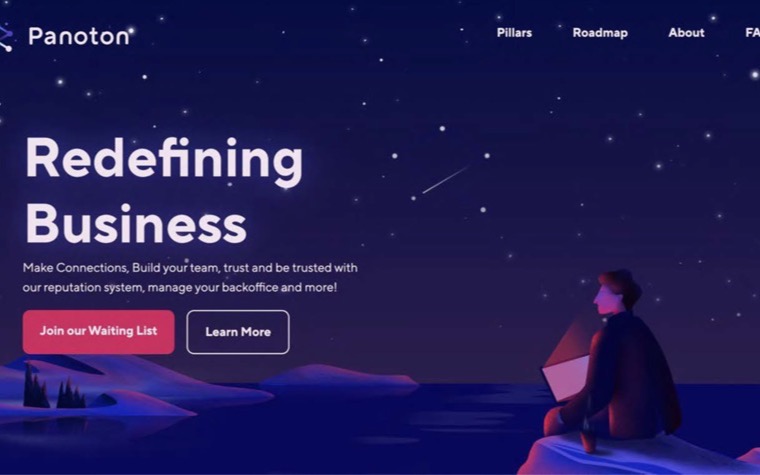
The challenge
Panoton had a clear promise and a hard build. A two-sided gig marketplace with blockchain settlement and payment gateways was a serious engineering program in 2021. The risk was the usual one: designing screens, or worse, writing requirements, before anyone agreed on who the product was for and what it had to do first.
What we did
Workshops before drawings
We started with product strategy workshops to set goals, audience and differentiators, and to split objectives into now and later. The result was a plan that later choices, from branding to features, could point back to.
A brand built for trust
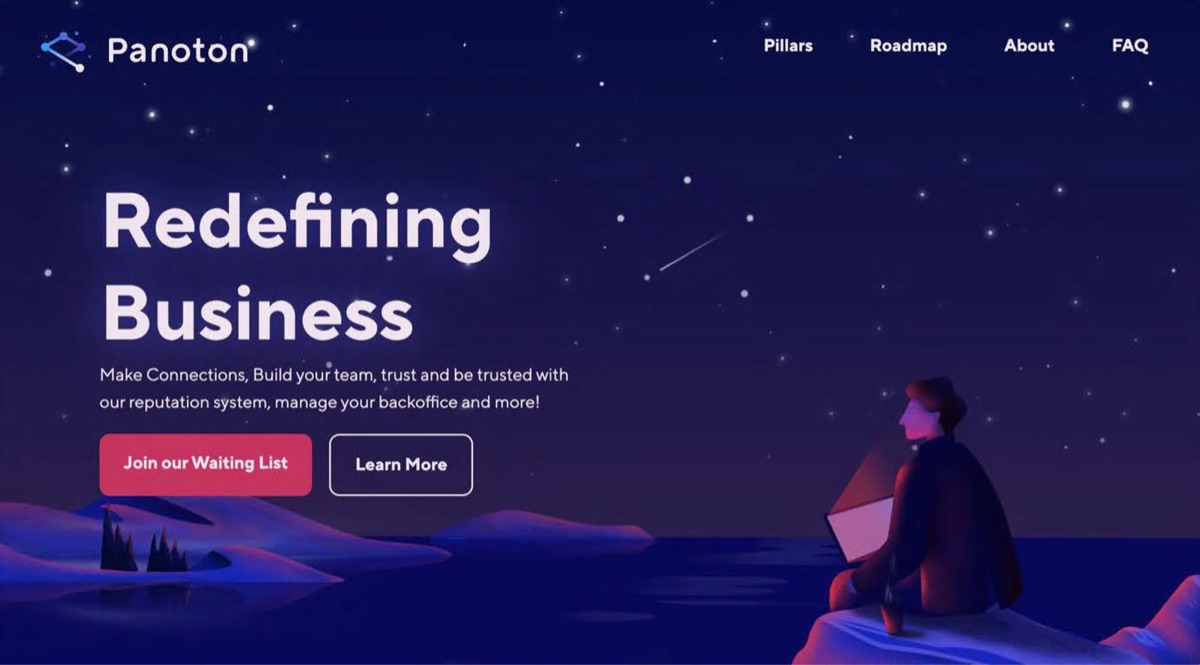
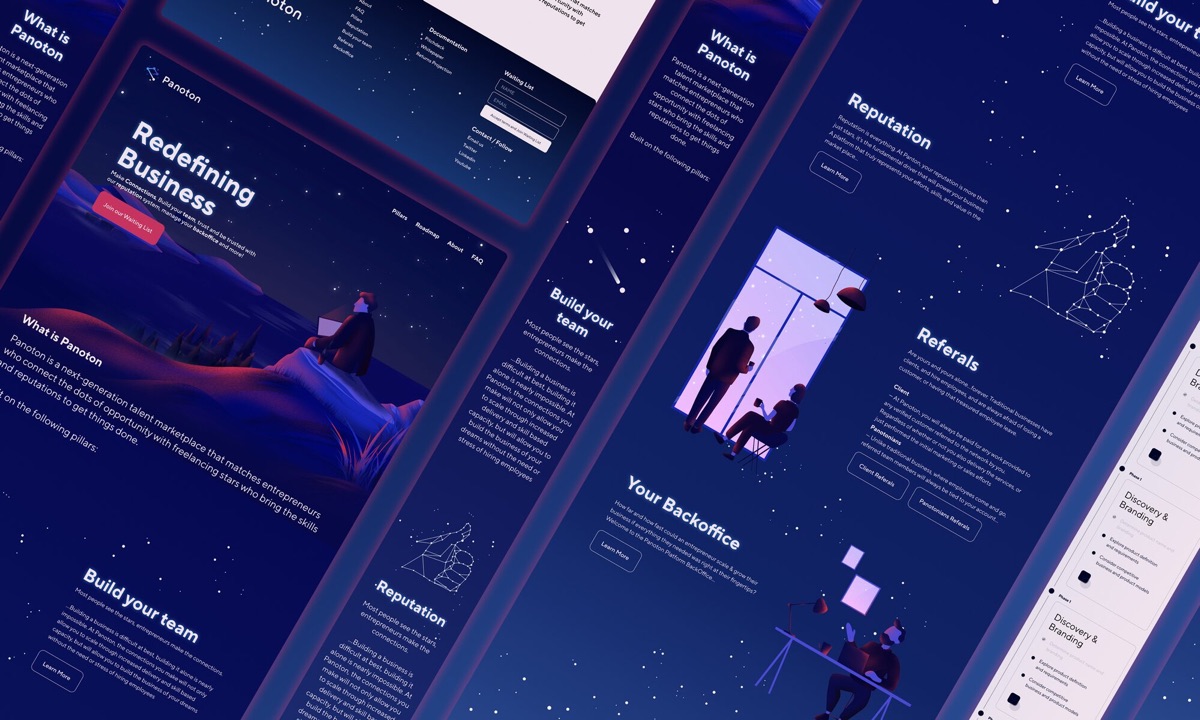
Logo, palette, iconography and layout aimed at trust rather than novelty. Choosing where to spend your working week is a serious decision, so the navigation centered on finding and applying for work quickly.
Wireframes set the requirements
We prototyped and revised flows to surface problems early. Only then did we write the technical scope for blockchain integration, payment gateways and data handling, so the scope came from a tested product rather than a wish list.
The result
Panoton received a product strategy agreed with stakeholders, a brand, a fully designed product surface and a technical scope. The project reached prototype and stopped there. There was no launch and there were no users.
The work itself has held up. Because the thinking was done in order and tested along the way, the scope is still usable.
What this means for your business
Decide what is worth building before you draw it, and draw it before you write requirements. A scope that comes out of tested designs keeps its value even if the build is paused. Doing the steps in order is cheaper than redoing them later.
This project was delivered by the Innovation Theory team, the Denver firm behind InTheory, before InTheory existed as its AI practice.
Other case studies
 Brand
HowdyBox
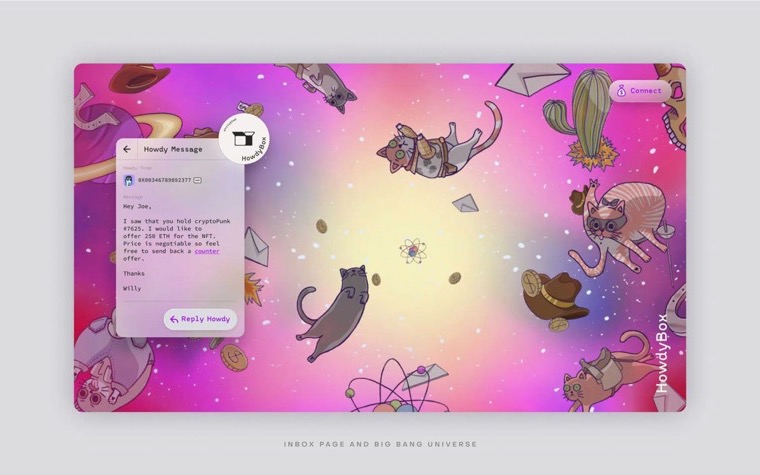
Naming, identity, illustration, UI and a pitch deck for a cross-chain messaging protocol, built around a box and a cat.
Read the case study →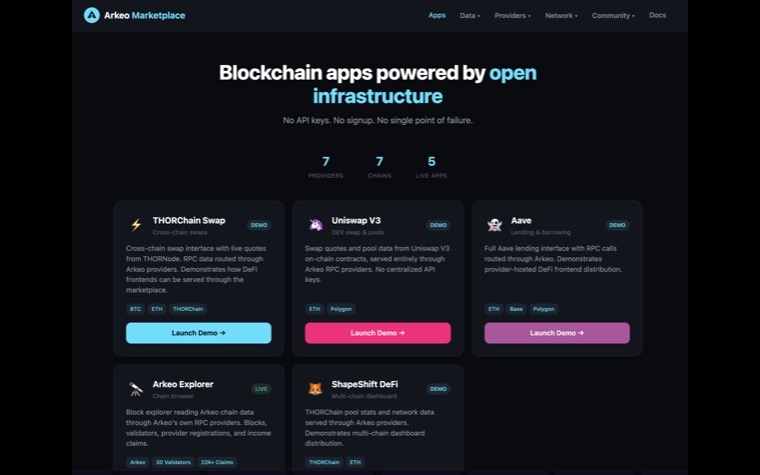 Product · 2024–2026
Arkeo
Twenty-two months building and running a decentralized data marketplace, with every finding from an outside security audit resolved.
Read the case study →Product · 2017–2018WISE and College Board
Machine learning that scored SAT practice answer sheets from a phone photo, built in 2017 and shipped through point releases.
Read the case study →Bring one expensive workflow. Leave with a clear next step.
In 30 minutes we look at one recurring workflow, what it costs you today and whether there is a credible case to improve it. If there is not, we will say so.
30 minutes with Phil or Martin. No technical brief, no pitch deck. Phil or Martin replies personally, usually within one business day.