An exchange that cut ten steps down to a short, guided flow.
ShapeShift was Erik Voorhees's idea for swapping one crypto asset for another with no account and no order book. We led the UI/UX and front-end build from the concept in 2014 to launch in summer 2015, then kept getting called back for the next piece of work.
- Product strategy
- UX research
- UI design
- Front-end build
- Brand systems
The challenge
Older exchanges asked for about ten steps to finish one trade. You opened an account you did not want, read a screen full of graphs and fields, and sometimes waited hours for an order to fill. When we interviewed users at every skill level, by survey and in person, the coin was never the complaint. The process was.
The open question through 2014 was whether a swap could work with no account at all, and what the backend would need to expose to make that possible. We worked it through in the same room as the founder and the backend team.
What we did
Define the flow and the endpoints together
We sketched the user flow alongside the backend team, so every screen had a matching endpoint before anyone built it. Design and engineering settled the same questions at the same table.
Show only what each step needs
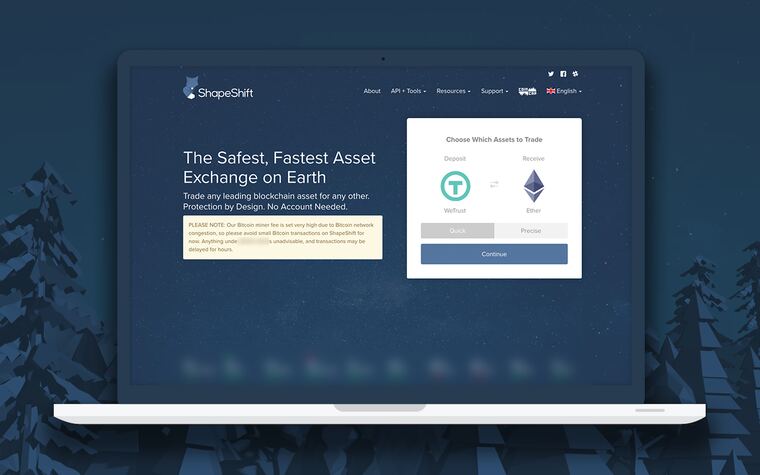
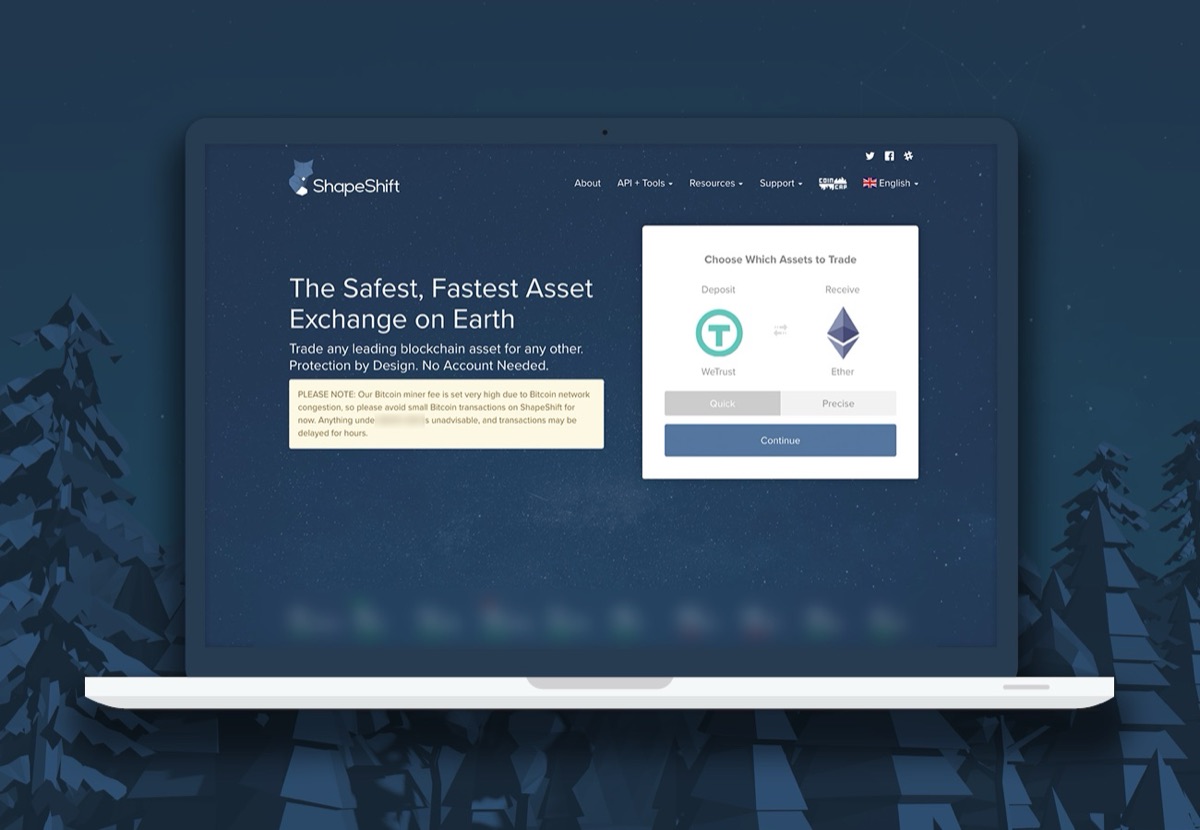
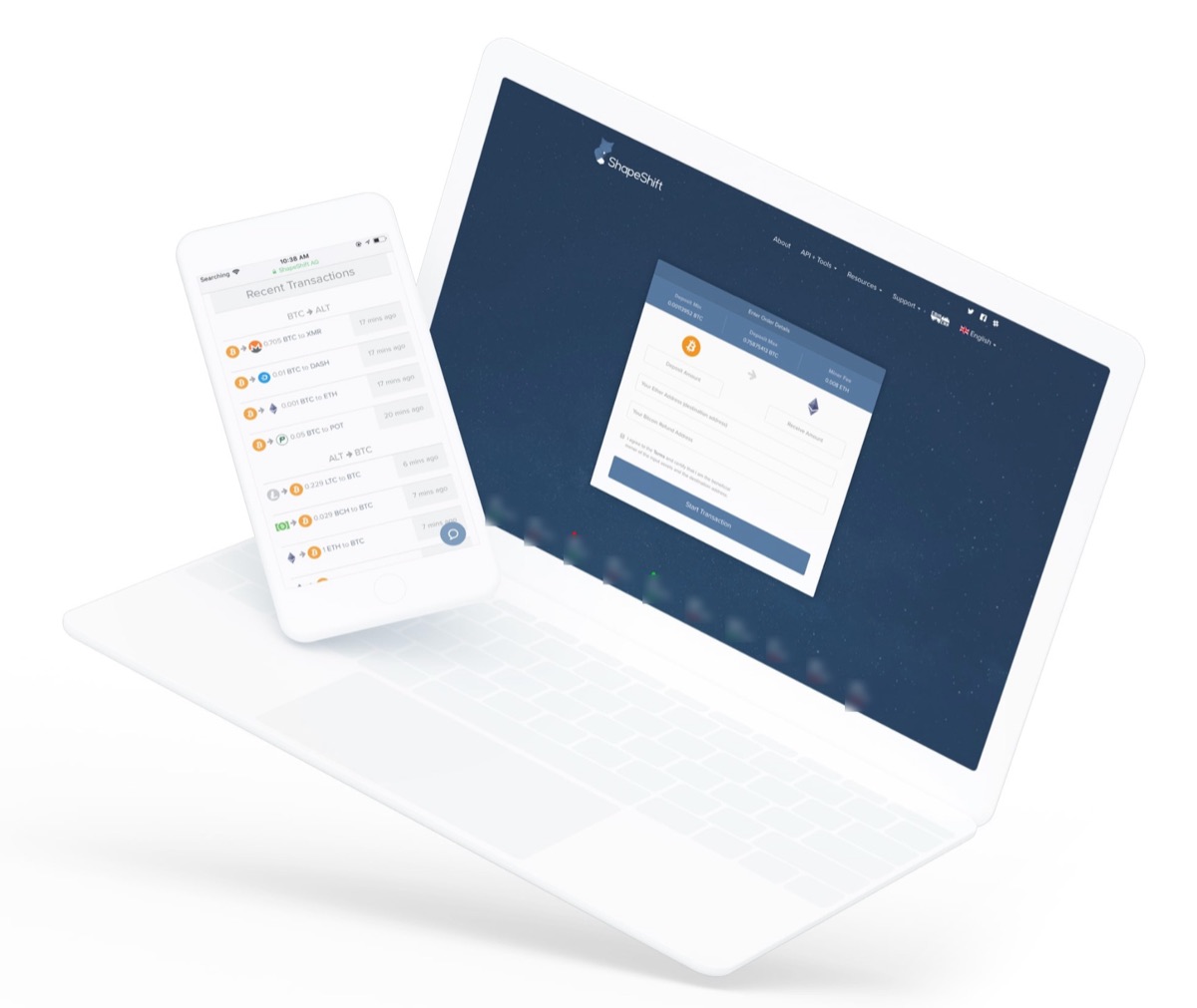
The argument we kept returning to was what a user needs to see, and when. Did they need the miner fee before picking a trading pair? Mostly not. So we split the exchange into separate steps and hid anything that was not needed yet. Amounts and addresses only appear once the pair is chosen.
Carry the same discipline to the business side
In 2017 we delivered twenty screens for a Partner Portal: a three-question router into two partner tracks, mandatory 2FA, organization verification, API keys shown once, payouts and an audit log. The payout address field only accepts a paste, because a mistyped Bitcoin address cannot be recovered.
Fix the process when a deadline exposes it
The FOX token membership integration had a hard October 1, 2018 date. We hit it, but a week was lost building a 2FA flow that turned out to be wrong. The retro produced named stage gates and one rule: anyone who can change the UX signs it off before work moves on.
The result
The product went live in summer 2015 and peaked at more than a million transactions a day. A screen captured in March 2020 still used the same stepped flow. The work continued for years after launch: the partner portal, two brand systems, the FOX membership product and dashboard, and a six-step security check for the KeepKey hardware wallet.
Through all of it we never took custody of customer keys. Holding keys would have made us a product owner carrying that liability, so we stayed a service company. Erik later called us again for the Valhalla project on THORChain.
What this means for your business
The biggest gains came from removing steps, not adding features, and from asking what a customer needs at each moment. When a deadline went sideways, we changed the process and wrote down who signs off on what. Deciding what not to own counted as much as deciding what to build.
This project was delivered by the Innovation Theory team, the Denver firm behind InTheory, before InTheory existed as its AI practice.
Other case studies
 Product · 2016–2018
SALT Lending
We held the fractional CTO seat at SALT Lending through launch, from a value proposition to a team of nearly a hundred.
Read the case study → Brand · 2016–2019
CoinDesk
Masthead, style guide, site, app and newsletter design, plus the Consensus event brand for its first New York shows.
Read the case study → Product · 2022–2024
Notable.art
A fifty-year physical catalog became a 991-work digital edition, each piece paired with an archival print and a certificate.
Read the case study →Bring one expensive workflow. Leave with a clear next step.
In 30 minutes we look at one recurring workflow, what it costs you today and whether there is a credible case to improve it. If there is not, we will say so.
30 minutes with Phil or Martin. No technical brief, no pitch deck. Phil or Martin replies personally, usually within one business day.